Listing data changes constantly.
An agent should not have to re-enter inventory or send clients elsewhere to search. The site needed an integrated listing layer that could stay useful as the market changed.
 Sphere MediaLet’s talk
ToddMatthews.com
Client website · Kamloops, British ColumbiaSphere designed and developed ToddMatthews.com to bring on-site property search, neighbourhood guides and enquiry paths into a distinctive real-estate website.
The public experience connects local research with available properties and a way to contact Todd. This case explores the website, its content and the technical delivery behind those pages.
A website walkthrough
Explore two project captures and the thinking behind each screen.
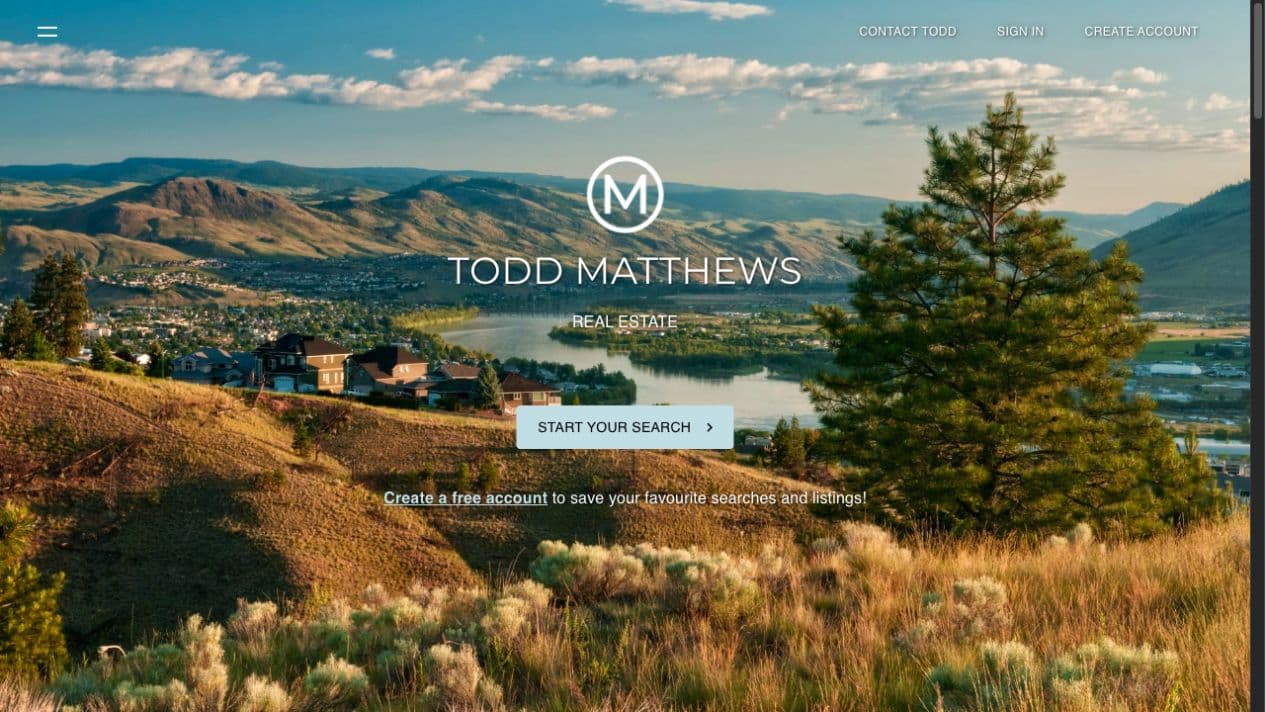
01 / What to notice
The homepage introduces Todd and the place he works. Property search has a prominent starting point, with contact and account links available in the same view.
Your homepage can explain your offer and give visitors one clear action: explore, request a quote or start a conversation.
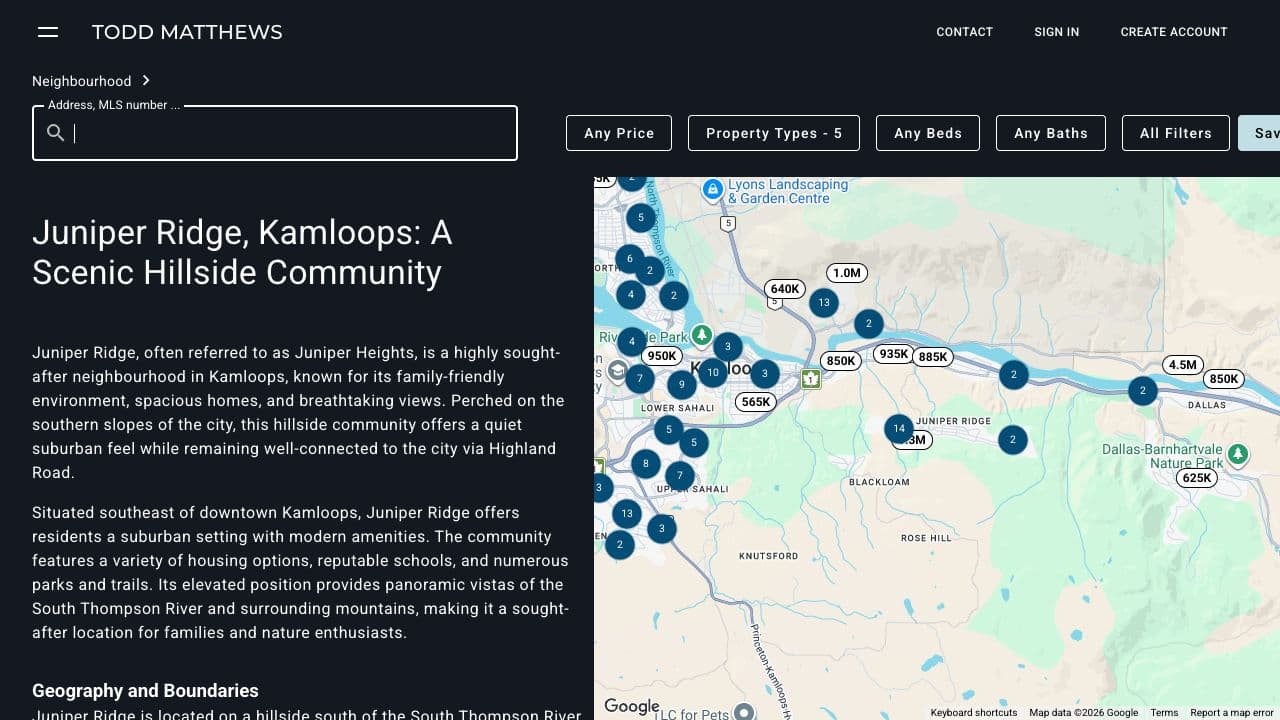
02 / What to notice
The Juniper Ridge guide places neighbourhood information beside a map of properties. Visitors can read about the area and explore homes without switching between separate websites.
Bring the information customers need alongside the next action, whether that is exploring a service, comparing options or making an enquiry.
Start with one landing page, content section or enquiry flow on your own website.
The website brief
Visitors need to find properties, understand an area and know how to take the next step. The website brings those needs into one public experience.
An agent should not have to re-enter inventory or send clients elsewhere to search. The site needed an integrated listing layer that could stay useful as the market changed.
Someone viewing a property has different questions from someone researching a neighbourhood. The public site needs clear contact paths from those different starting points.
A guide can help someone understand an area. Connecting it with property discovery and a way to contact the agent gives that research a practical next step.
Property photography can make a listing experience slow quickly. Images need responsive sizing, modern formats and CDN delivery rather than one oversized file for every screen.
Buyers search by neighbourhood, lifestyle, schools, housing type and local context. Thin, interchangeable pages do little for those long-tail searches—or for the AI systems people increasingly use to research an area.
The website, listing feed and property imagery need a maintainable foundation. Hosting and deployment belong in the website scope.
The public experience
Neighbourhood content and property search give visitors several ways to explore. Enquiry entry points connect that browsing experience with a way to ask for help.
Public features and an illustrative relationship model. Private CRM routing and follow-up automation are outside this case study.
CREA DDF® · Local guides · Property imagery
Search · Listings · Accounts · Enquiries
Property enquiry · General contact
A planning model for real-estate services, not measured conversion results or a map of Todd’s private workflows.
Strong service and an ongoing relationship create the opportunity for repeat business and new introductions.
What we built
CREA DDF® listing data powers an on-site search and property-browsing experience, keeping the customer journey inside Todd’s brand rather than handing it off at the moment of highest intent.
Detailed, locally authored guides answer the specific questions buyers ask about individual Kamloops neighbourhoods. That creates useful long-tail search entry points and gives crawlers and AI answer systems more specific local source material to interpret.
Property and general contact entry points let a visitor move from browsing to asking a question. The public interface brings those next steps into the website experience.
Account, favourite and saved-search surfaces support the property-research experience. This case focuses on those public interfaces and the paths a visitor can follow.
Cloudinary-backed delivery creates appropriately sized and formatted image variants and distributes them through a media CDN for a lighter experience across phones and larger displays.
The Nuxt application is hosted and deployed on Vercel, with edge delivery managed alongside the website and its integrations so the public experience and the systems behind it can evolve together.
Content built around local questions
The Juniper Ridge guide puts local housing and lifestyle information beside a map of properties. A visitor researching the area can read about the neighbourhood and explore homes in the same place.
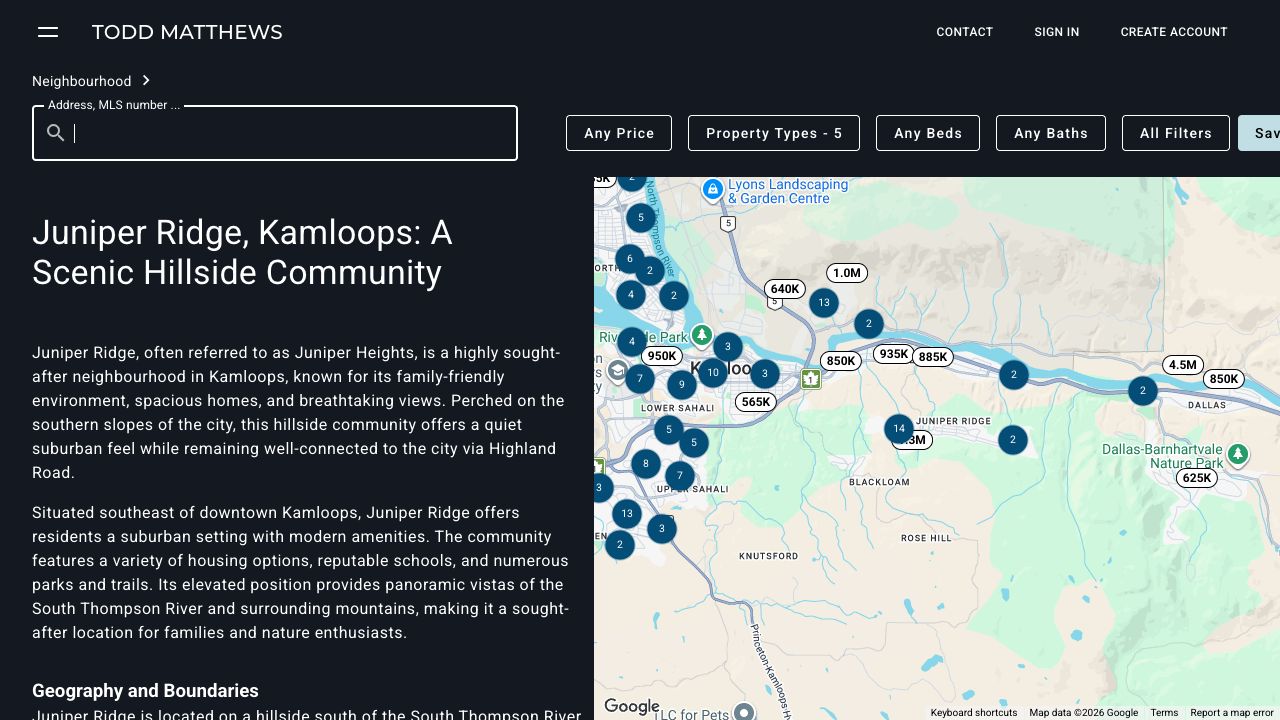 View the live Juniper Ridge guide
A repeatable content model
The framework makes every guide easy to navigate without turning the content into interchangeable template copy. Each neighbourhood keeps the same useful questions, then answers them with information specific to that place.
Geography, boundaries and how the neighbourhood connects to the rest of Kamloops.
Residential character, development patterns and the kinds of homes buyers can expect.
Amenities, schools, services and the practical details that shape a move.
Transportation, walkability and the routes residents use to move around the city.
Parks, recreation, landscape and the qualities that make the area distinct.
Current listings placed alongside the guide so research can move naturally into discovery.
Technical discovery layer
An August 2026 review of the public site documented three discovery signals: distinct page identity, meaningful entity context and a path from local research into inventory.
Public page output at the time of review. This does not establish search rankings or traffic results.
Distinct title and description · Locally specific editorial content
Across the homepage, search, guide hub, individual guides and active property pages.
Guides identify places; active property pages expose listing, offer, residence and location data.
A crawlable hub links to 25 guides; guide inventory becomes available after the page loads.
Claim boundaryThis demonstrates verified discovery signals, not complete canonicalization, a fully connected schema graph or server-rendered listing cards.
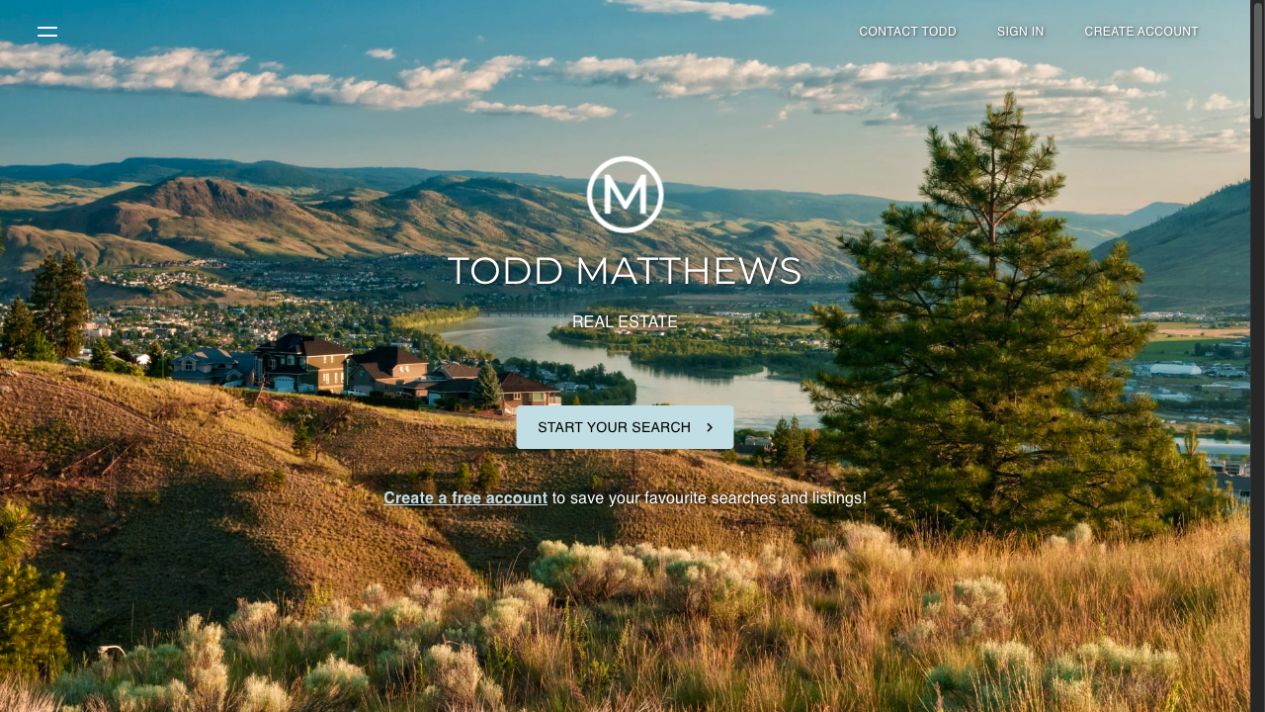
The delivered website
Property discovery, neighbourhood content and enquiry paths share one branded website. The work demonstrates website implementation and content structure; it does not establish lead volume, sales growth or campaign returns.
For real estate teams
For a new real-estate brief, we can scope a website, listing-data integration and ongoing monthly service around your market and tools. A managed real-estate platform starts with the access, data permissions, requirements and support responsibilities agreed for your project.
This describes Sphere's service model—not the commercial terms of the ToddMatthews.com project.Brand, content, market, data sources and integration requirements are shaped into the initial implementation.
Scope the required listing search, enquiry capture, CRM routing and measurement, subject to feed permissions and system access.
Hosting, delivery, maintenance and ongoing improvements continue through a monthly service plan.
Paid media, campaign landing pages, creative, tracking and reporting can be added where they support a clear acquisition plan.
Commercial modelAn initial onboarding engagement establishes the implementation. Exact scope, monthly service and any custom development are defined after a conversation.
Optional growth supportMedia buying is scoped separately. Advertising spend is not included in the platform service.
Managed Real Estate Platforms
Tell us about the market you serve, the systems already in place and what needs to work better. We'll use that context to shape an initial implementation, ongoing service and any optional campaign support.
info@spheremedia.com